Don't Get Burned: Your Complete Field Guide to Verifying a Ruby Before You Buy
Let's be real: buying a ruby without doing your homework is a gamble. The market is loaded with beautiful stones, but it's also got its share of glass-filled impostors, aggressively treated gems, and sellers who are counting on you to stay in the dark. The good news? You don't need a gemologist's degree to protect yourself. You just need a solid playbook—and that's exactly what this is.
Start With the Seller, Not the Stone
Before you even look at the ruby itself, take a hard look at who's selling it. A trustworthy seller should have no problem answering direct questions about where the stone came from, what treatments (if any) it has undergone, and what documentation backs up their claims. If someone gets cagey when you ask basic questions, that's your first red flag.
Here's a short list of questions worth asking every single time:
- Where was this ruby mined? Origin matters enormously in ruby pricing. Burmese (Myanmar) stones, for example, command a serious premium. If a seller claims a premium origin but can't back it up with documentation, be skeptical.
- Has this stone been treated? Almost all rubies on the market have been heat-treated to improve color and clarity—that's normal and widely accepted. What's not okay is undisclosed fracture filling or lead glass treatment, which dramatically reduces value.
- Can I see the lab report? Any seller worth their salt should have a certificate from a recognized gemological lab. If they're vague about this, walk away.
The Certifications That Actually Matter
Not all gem reports are created equal. In the US market, the most respected certifications come from a handful of major labs:
GIA (Gemological Institute of America) is the gold standard. Their ruby reports detail color, clarity, geographic origin (when determinable), and any treatments. If a ruby comes with a GIA report, you're working with reliable, third-party information.
AGL (American Gemological Laboratories) is another highly respected option, particularly well-regarded for colored stones. Their reports are detailed and trusted by serious collectors.
Gübelin and SSEF are Swiss labs that carry enormous weight in the international market, especially for high-end Burmese rubies.
Be cautious with reports from lesser-known labs you haven't heard of. Some sellers use in-house certificates or obscure labs that aren't held to the same standards. That doesn't automatically mean the stone is bad, but it does mean you need to dig deeper.
Common Deception Tactics in the Ruby Market
This is where things get interesting—and a little uncomfortable. Here are the tricks that show up most often:
Glass-Filled Rubies: These are low-quality rubies with fractures that have been filled with lead glass to improve transparency and appearance. They can look stunning in photos. Under a loupe or jeweler's microscope, you'll often see a glassy luster inside the stone and sometimes gas bubbles. A reputable lab report will flag this immediately, but unscrupulous sellers sometimes omit this detail.
Synthetic Rubies Sold as Natural: Lab-grown rubies are real rubies chemically—they're just not natural. There's nothing wrong with buying one intentionally, but paying natural-ruby prices for a synthetic stone is a problem. Always confirm "natural" in writing and on the certificate.
Misleading Origin Claims: "Burmese ruby" is one of the most value-boosting phrases in the gem world. Some sellers apply it loosely to rubies from other regions or without proper documentation. Only a reputable lab can confirm geographic origin through chemical and spectroscopic analysis.
Photography Tricks: Rubies are notoriously difficult to photograph accurately. A stone that looks like a vivid, pigeon's-blood red online might be a dull, pinkish-red in person. Always request video under multiple lighting conditions, and if possible, see the stone in person before finalizing a high-value purchase.
Simple Tools That Give You an Edge
You don't need a lab to do some basic verification yourself. A few affordable tools can help:
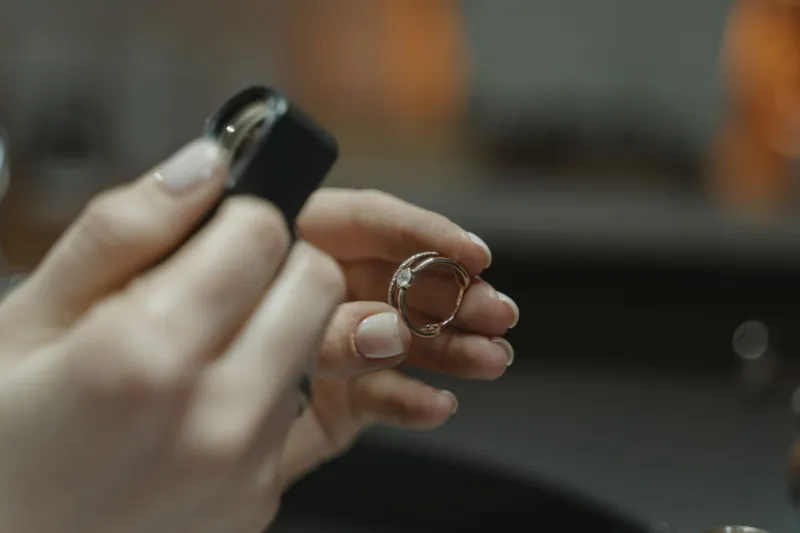
- A 10x loupe: The standard tool for examining inclusions and surface characteristics. Glass-filled rubies often show tell-tale signs under magnification.
- A UV flashlight: Natural rubies typically fluoresce red under long-wave UV light. Strong fluorescence can actually be a positive sign of a quality Burmese stone. Synthetic rubies may fluoresce differently.
- A refractometer: Rubies have a specific refractive index (1.762–1.770). A basic refractometer can help rule out obvious impostors like red glass or garnet.
These tools won't replace a lab report, but they're a solid first line of defense—especially at gem shows or estate sales where you're making quick decisions.
Building Confidence as a Buyer
The collectors who get the best deals and the fewest regrets are the ones who slow down. Rushing into a ruby purchase because something looks gorgeous or the price seems irresistible is how people get burned. Take your time, ask your questions, and don't let anyone pressure you into skipping the paperwork.
At Ruby Group Shop, we've built our entire curation process around this principle. Every stone we feature goes through a thorough vetting process so our community can shop with confidence—not crossed fingers. When you're buying through a trusted platform or group buying community, you're not just getting a better price. You're getting a layer of accountability that solo buyers rarely have access to.
Authentication doesn't have to be intimidating. With the right questions, the right tools, and a healthy dose of skepticism, you can navigate the ruby market like a pro—no gemologist degree required.