No More Velvet Ropes: How Open Pricing and Collective Buying Are Shaking Up the Fine Jewelry World
The Old Guard Had a Good Run
Walk into almost any traditional jewelry store in America and you'll notice something pretty quickly: the prices aren't always on the tags. There's a reason for that. For generations, fine jewelry — and rubies in particular — has been sold through a system built on information asymmetry. The dealer knows what the stone cost at auction. The wholesaler knows what markup is standard. The customer? They're largely flying blind, armed with nothing but a vague sense that red gemstones are valuable and a salesperson who's very motivated to close.
That model worked for a long time. But it's starting to crack — and the pressure is coming from a direction the old guard didn't see coming.
What Happens When Buyers Compare Notes
The shift didn't start with a single company or a single moment. It started when collectors began talking to each other. Online forums, Facebook groups, subreddits dedicated to gemstone investing — these spaces gave everyday buyers something they'd never really had before: a peer network. Suddenly, someone in Ohio could find out that a collector in Texas paid 30% less for a nearly identical ruby from the same origin. That kind of information travels fast, and it changes expectations permanently.
Group buying platforms took that peer energy and gave it structure. Instead of just sharing information, buyers started pooling resources — coordinating purchases, splitting access fees for gem shows, and negotiating directly with wholesalers who had previously only dealt with retailers. The leverage that comes from collective demand is genuinely powerful, and once buyers experience it, going back to retail markup feels almost absurd.
Transparency Isn't Just a Buzzword Here
At Ruby Group Shop, transparency isn't a marketing slogan — it's the operational foundation. Every ruby listed on the platform comes with documented provenance, third-party certification details, and pricing context that helps buyers understand what they're actually paying for and why. That last part matters more than most people realize.
Knowing a stone is GIA-certified tells you something. Knowing how that certification compares to others in the same price range, understanding what origin premium is baked into the cost, and seeing how similar stones have moved in value over the past few years — that tells you something genuinely useful. It's the difference between buying a ruby and making a ruby investment.
Traditional retailers have historically resisted this level of disclosure because transparency compresses margins. When buyers can benchmark a price against real market data, the days of charging a 200% markup on a mid-grade stone become numbered. That's uncomfortable for some players in the industry. It's great news for collectors.
The Authentication Problem — Finally Getting Solved
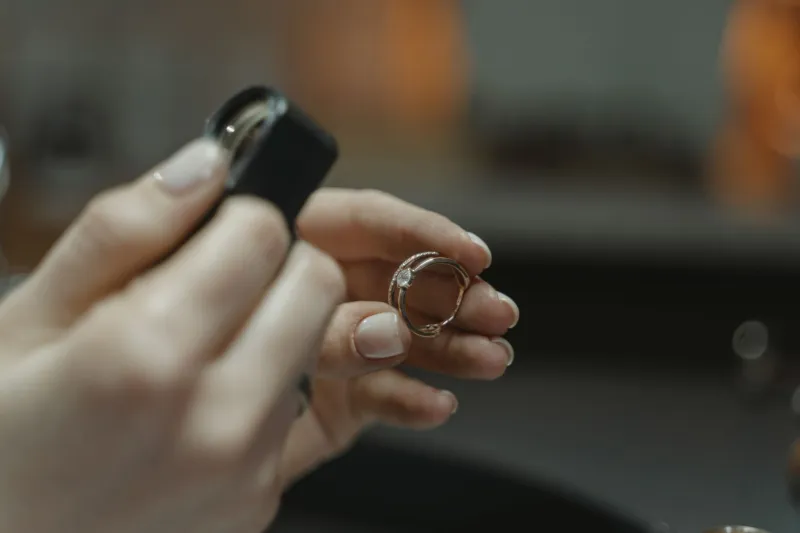
One of the murkiest corners of the ruby market has always been authentication. Treatments, enhancements, and outright synthetic substitutes have been a persistent headache for buyers who don't have a gemologist on speed dial. Heat treatment is industry-standard and generally acceptable when disclosed, but the key phrase there is when disclosed — something that didn't always happen in traditional retail settings.
Group buying communities have pushed authentication standards higher simply by demanding them. When a platform serves buyers who are actively comparing notes and sharing experiences, cutting corners on verification becomes a liability. The community notices. Word spreads. Reputation is everything.
Ruby Group Shop leans into this dynamic by making authentication documentation a non-negotiable part of every transaction. Buyers aren't just taking a salesperson's word for it — they're getting paperwork, provenance records, and in many cases, access to the certification process itself. That level of accountability would have been nearly unthinkable in a traditional retail setting a decade ago.
What This Means for Traditional Jewelers
It would be easy to frame this as a David-versus-Goliath story, but the reality is more nuanced. Some traditional jewelers are adapting — leaning into their expertise, offering custom design services that platforms can't replicate, and building loyal client bases around relationships rather than information monopolies. Those shops will likely do fine.
The ones feeling real pressure are the mid-tier retailers who built their business model on opacity. When your value proposition is essentially "trust us, this is a fair price," and buyers now have the tools to verify that claim independently, you have a problem. The response from some corners of the industry has been to double down on marketing and storytelling rather than on genuine value delivery — a strategy that's increasingly transparent to a buyer pool that's more educated than ever.
The broader fine jewelry industry is also reckoning with a generational shift. Younger American collectors — particularly millennials and Gen Z buyers who grew up comparison-shopping everything from flights to furniture — have zero patience for pricing theater. They want data. They want receipts. They want to know that what they're buying is what they're told it is. Group platforms speak that language fluently.
Access Was Always the Real Barrier
Beyond pricing and authentication, there's a third wall that's been coming down: access. Gem shows, dealer networks, estate auction previews — these were spaces that required either industry credentials or a thick Rolodex to navigate. The average collector simply didn't have a seat at that table.
Collective buying changes the math on access in a fundamental way. When a group of buyers pools resources, they can meet minimum purchase thresholds that unlock wholesale pricing. They can hire independent appraisers to evaluate stones before purchase. They can attend events and build relationships with suppliers that would be financially impractical for any single buyer to manage alone.
This is the part of the model that tends to surprise people most when they first encounter it. The assumption has always been that fine ruby collecting is a rich person's game — that the best stones go to buyers with the deepest pockets and the best connections. Group buying disrupts that assumption without requiring anyone to win the lottery. It just requires finding the right community.
The Ripple Effect Is Real
What's happening in the ruby market right now is part of a broader pattern playing out across luxury goods. When information becomes democratized and buyers organize themselves effectively, the power dynamics of any market shift. Prices become more rational. Quality standards rise. The buyers who were previously excluded start showing up — and they bring their own expectations with them.
For collectors who've been watching from the sidelines, wondering whether fine rubies were really accessible to someone without a six-figure jewelry budget, the answer coming from platforms like Ruby Group Shop is increasingly clear: they are. The velvet rope was always more illusion than reality. It just took a community — and a commitment to doing things differently — to finally pull it down.