When Paperwork Lies: The Hidden Reasons Two Rubies With the Same Cert Can Sell for Completely Different Prices
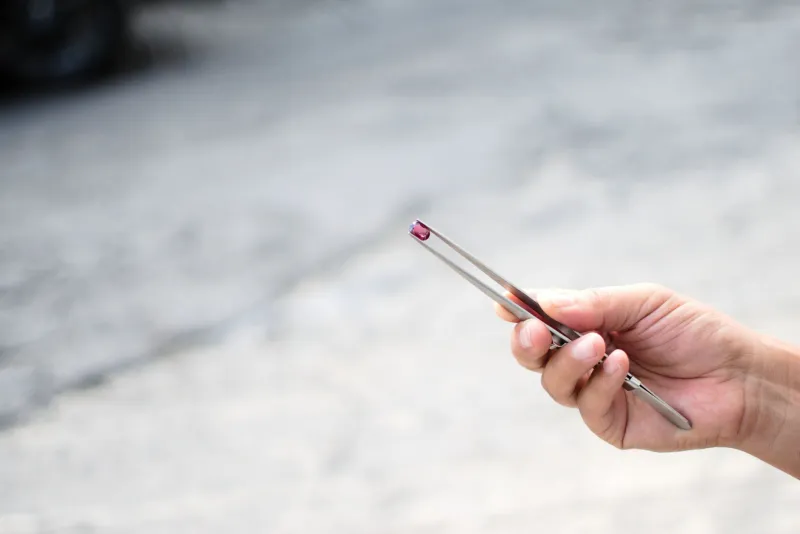
Picture this: two rubies, sitting side by side on a jeweler's tray in Midtown Manhattan. Both carry certificates from respected gemological labs. Both are described as "natural, no heat treatment, pigeon's blood red." One sells for $18,000 per carat. The other moves for $6,500 per carat. Same paperwork. Wildly different outcomes.
If that scenario makes your head spin, you're not alone. It's one of the most confusing — and frankly frustrating — realities of buying rubies today. The good news? Once you understand what's actually driving those price gaps, you'll shop smarter, negotiate better, and stop treating a certificate like a guarantee it was never meant to be.
The Certificate Is a Starting Line, Not a Finish Line
Gemological reports from labs like GIA, Gübelin, and GRS are genuinely valuable tools. They document origin, treatment history, and key quality characteristics. But here's the thing most sellers won't volunteer: lab reports describe a stone — they don't appraise it. The market assigns value, and the market is far more nuanced than any checklist on a piece of paper.
Two rubies can share the same origin designation (say, Burma/Myanmar) and the same treatment status (unheated) and still represent completely different tiers of desirability. Why? Because the factors that matter most to serious collectors — color saturation, fluorescence behavior, crystal transparency, and that elusive inner glow called adularescence or "silk" — are often described in vague or inconsistent language across different labs and even between different graders at the same lab.
Color Is King, But "Red" Covers a Lot of Ground
Ask any seasoned ruby dealer what separates a $5,000-per-carat stone from a $25,000-per-carat stone, and the answer almost always starts with color. Specifically, hue, tone, and saturation — three distinct dimensions that interact in ways that photographs and written descriptions struggle to capture.
The legendary "pigeon's blood" designation, now formally recognized by labs like GRS, refers to a very specific combination: a pure red hue with a slightly bluish undertone, vivid saturation, and strong fluorescence that makes the stone almost seem to glow from within. But labs apply this label with varying degrees of strictness. Some stones earn it at the edge of the threshold; others sit comfortably at its center. The difference in market price between those two scenarios? Enormous.
Tone matters just as much. A ruby that's too dark reads as garnet-ish and loses value. Too light, and it edges toward pink sapphire territory. The sweet spot — a medium to medium-dark tone with maximum color presence — is where buyers compete hardest and prices climb fastest. Two stones can both be described as "vivid red" in their reports while occupying very different positions on that spectrum.
The Origin Game: Why Provenance Isn't Always What It Seems
Burmese rubies command a premium that's almost mythological at this point. Stones from the Mogok Valley carry cultural and historical weight that drives prices well beyond what pure quality metrics would suggest. But "Burma origin" on a certificate doesn't tell the whole story.
Within Mogok itself, there are microlocations that produce stones with subtly different characteristics. A ruby from one pocket of the deposit might show stronger silk and better fluorescence than another technically sourced from the same region. Labs typically can't distinguish between these sub-origins, so two Mogok rubies with identical paperwork can represent genuinely different levels of collector desirability.
Then there's the question of secondary origins that occasionally punch above their weight. Mozambique, for example, has produced rubies over the past decade that rival Burmese stones in color quality. A well-cut, high-saturation Mozambique ruby with no treatment history can outperform a mediocre Burmese stone on the open market — yet buyers anchored to the "Burma premium" sometimes miss this entirely.
Treatment Disclosures: Reading Between the Lines
Heat treatment is the most common enhancement applied to rubies, and its presence or absence dramatically affects pricing. An unheated ruby of fine quality typically commands two to five times the price of a comparable heated stone — sometimes more at the top end of the market.
But "no indications of heating" on a lab report doesn't always mean what buyers assume. It means the lab found no detectable signs of treatment using current testing methods. As detection technology evolves, standards shift. Some stones that carried clean reports a decade ago have since been re-examined under more sophisticated analysis.
More nuanced still is the world of minor versus significant heat treatment. Labs like GRS and Gübelin often include language like "indications of minor heating" — a designation that sits between fully untreated and heavily processed. Stones in this middle category are often misread by buyers who see "heated" and immediately discount, when in reality the market treats minor-heat rubies very differently from stones that have undergone glass-filling or other more invasive enhancements.
Cut Quality: The Factor Certificates Almost Never Discuss
Here's a dirty little secret of the ruby world: most lab reports say almost nothing meaningful about cut quality. They'll note the shape and cutting style, maybe list the measurements and estimated weight. But the precision of the cut — how well the facets align, how effectively the stone retains light, whether the proportions maximize that all-important color saturation — is largely left for the buyer to assess independently.
A poorly cut ruby leaks light through the bottom of the stone, producing a dull, windowed appearance that kills its visual impact. A masterfully cut stone of the same raw material can look twice as alive. Yet both might carry identical certificates with no mention of these differences. This is why experienced collectors always examine stones in person or demand high-resolution video before committing to a purchase.
Practical Strategies for Navigating the Certification Maze
So what's a smart buyer to do? A few approaches that actually work:
Cross-reference multiple lab opinions. If you're considering a significant purchase, it's worth having the stone examined by more than one respected lab. Consistency across GIA, Gübelin, and GRS reports adds confidence. Discrepancies are a signal to dig deeper.
Prioritize labs with strong origin expertise. For rubies specifically, Gübelin and GRS are widely considered the gold standard for origin determination and treatment disclosure. GIA carries broad market recognition. Each has different strengths, and knowing which labs command the most respect in the ruby market specifically — as opposed to the general gemstone market — matters.
Ask for the full report, not a summary. Some sellers present abbreviated versions of lab reports. Always request the complete document, including any qualitative comments or additional observations that may appear in supplementary notes.
Join a buying community with experienced eyes. One of the most underrated advantages of shopping through a curated group platform is access to collective expertise. When you're part of a community of serious collectors, you benefit from the pattern recognition that comes with years of market experience — the kind of intuition that helps spot a $6,500-per-carat stone masquerading as an $18,000 opportunity (or vice versa).
The Bottom Line
A ruby certificate is a tool, not a verdict. The most expensive rubies in the world are bought and sold by people who understand that the document in their hand is just the beginning of the due diligence process. Color, cut, provenance nuance, treatment history, and market timing all layer on top of that paperwork to produce the actual price a stone commands.
At Ruby Group Shop, we believe in giving collectors the context they need to make genuinely informed decisions — not just handing them a certificate and calling it a day. Because when you understand what's really driving value, you stop overpaying for mediocre stones with impressive paperwork and start finding the real gems hiding in plain sight.