What You're Really Paying For: How Group Buying Blows the Lid Off Jewelry Markup Culture
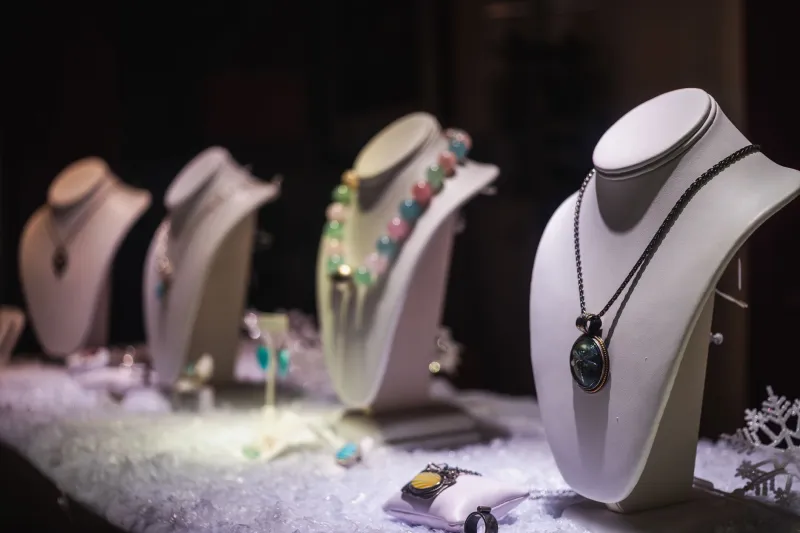
Walk into any high-end jewelry store in the US, and you'll notice something almost immediately: there are no price tags on the display cases. You have to ask. That's not an accident. Traditional retail has always depended on a certain level of price mystery to keep margins healthy, and nowhere is that more true than in the fine gemstone market. But something is changing — and collectors who've discovered group buying platforms are leading the charge.
The Markup Nobody Talks About
Here's a number that tends to stop people cold: the average retail markup on fine jewelry in the United States sits somewhere between 100% and 300% above wholesale cost. For rubies specifically — especially investment-grade stones with strong color saturation and clean provenance — that gap can be even wider. A stone that a retailer acquires through a wholesale dealer for $4,000 might land on a velvet display tray with a $11,000 price tag and a friendly salesperson explaining why it's "fairly priced for the quality."
None of that is technically dishonest. Retailers have real overhead: rent, staff, insurance, marketing, custom settings, and the cost of carrying inventory that might sit unsold for months. But the issue isn't whether the markup exists — it's that most consumers have no way to see it. You're comparing a price to nothing.
Group buying models change that equation entirely. When a platform aggregates demand from dozens or hundreds of buyers, it can approach suppliers at a volume that unlocks wholesale or near-wholesale pricing. Suddenly, consumers have a reference point. And once you've seen behind the curtain, it's hard to unsee it.
Real Collectors, Real Numbers
Take Patricia, a collector based in Nashville who spent years buying rubies through a combination of local jewelers and estate sales. She estimates she spent roughly $22,000 over five years building a modest collection of natural rubies — mostly oval and cushion-cut stones in the one-to-two carat range. When she joined a collective buying group two years ago, she started running price comparisons as a hobby.
"I pulled up three stones I'd bought at retail and found comparable stones — same origin, similar certification, overlapping color grades — through the group buying channel," she says. "On average, I'd paid about 2.3 times what the collective price would have been. One stone was almost three times the price. I wasn't even mad, honestly. I was just fascinated."
Patricia's experience isn't unusual. Marcus, a collector in Phoenix who focuses on Burmese rubies, describes a similar awakening. He started tracking prices across channels about eighteen months ago and found that the collective model consistently delivered stones at 40% to 60% below comparable retail prices — even after accounting for any platform fees. "The weird part," he says, "is that the certifications are often from the same labs. GIA is GIA. The stone doesn't know where it was sold."
Why Retail Markups Are So High
It's worth being fair here: traditional retailers aren't simply being greedy. The economics of physical jewelry retail are genuinely challenging. A store in a premium shopping district might pay $30,000 a month in rent. Staff who can speak knowledgeably about gemstones command real salaries. And unlike a clothing retailer, a jewelry store can't just discount unsold inventory at the end of a season without signaling something is wrong with the piece.
But transparency advocates argue that consumers deserve to know what they're actually paying for. When a $9,000 retail price includes $2,000 worth of stone and $7,000 worth of overhead allocation, marketing, and margin, that's information a buyer could use. Group buying models essentially strip away those layers and let the stone's intrinsic value lead the conversation.
Platforms like Ruby Group Shop are built on exactly this premise. By curating stones directly and bringing collective purchasing power to the sourcing process, the model compresses the distance between origin and owner. You're not paying for a flagship store on Michigan Avenue. You're paying for the ruby.
The Psychological Game Retailers Play
Beyond the raw numbers, there's a psychological dimension to retail markup that's worth naming. Luxury retail environments are carefully engineered to make price feel secondary to experience. The lighting, the display cases, the unhurried sales process, the velvet trays — all of it is designed to shift your attention from "is this a fair price" to "do I deserve this beautiful thing."
That's not a conspiracy. It's just good retail design. But it does mean that comparison shopping in traditional jewelry environments is genuinely difficult. Prices vary wildly between stores, terminology isn't standardized, and the social dynamics of a jewelry store make it awkward to pull out your phone and start Googling.
Group buying sidesteps all of that. You're evaluating a stone on its documented merits — origin, treatment disclosure, certification, color grade, clarity — without the ambient pressure of a retail environment. Several collectors describe this as the part they value most: not just the price savings, but the clarity of decision-making.
What This Means for the Industry
Traditional retailers are noticing the pressure. Some high-end jewelers have begun offering more transparent breakdowns of what goes into their pricing — a direct response to customers who've started arriving with comparison data. Others are doubling down on the experience angle, arguing (not without merit) that there's value in the service, the setting, the story.
But the genie is out of the bottle. Once collectors understand that a certified natural ruby from a reputable origin can be acquired at dramatically lower prices through collective channels, the burden of proof shifts. Retailers now have to justify the premium, not just assume it.
For buyers, that's genuinely good news. Whether you end up purchasing through a group buying platform or a traditional retailer, understanding the markup landscape makes you a sharper negotiator and a more informed collector. The ruby doesn't change. Only the price does.