Restore, Redesign, or Replace? A No-Stress Guide to Handling Grandma's Vintage Ruby Ring
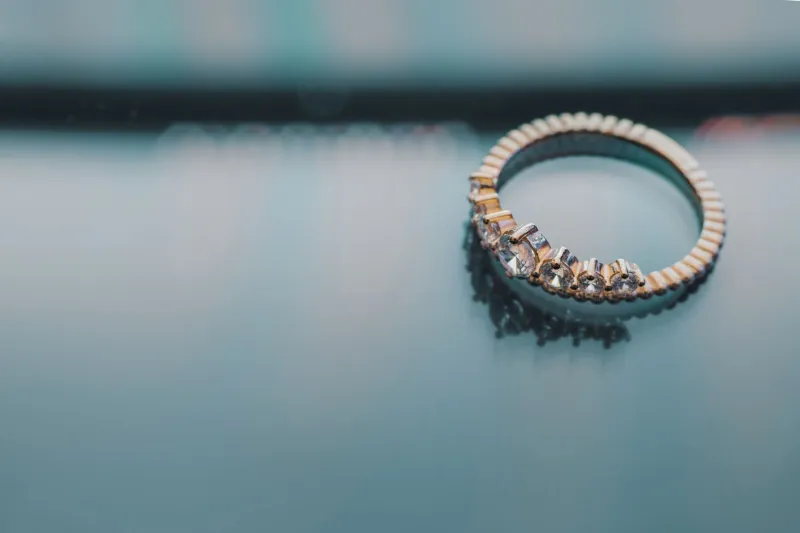
You've just inherited a ruby ring. Maybe it came with a handwritten note tucked in a velvet box. Maybe your mom slipped it onto your finger at the kitchen table and said, "Grandma would have wanted you to have this." Either way, you're now the keeper of something that carries decades of family history — and you're staring at a stone that's maybe chipped, a setting that's definitely bent, and a style that, let's be honest, looks like it belongs in 1974.
So what do you do?
This is one of the most emotionally charged decisions jewelry owners face, and it's more complicated than it looks. The good news: there's no single right answer, and with the right information, you can make a choice you'll feel good about for years.
First, Take a Breath (and Don't Rush to the Jeweler)
The first instinct many people have when they inherit a piece they're not sure about is to take it to the nearest jewelry counter and ask what it's worth. That's understandable, but it's not the best first move.
Chain jewelry stores are not always equipped to assess vintage or antique pieces accurately, and a quick appraisal in a mall setting won't give you the nuanced picture you need. Before anything else, give yourself some time to sit with the piece. Research its approximate era based on the setting style. Look for any hallmarks stamped inside the band — these can tell you a lot about the metal's age and origin.
Then, when you're ready, seek out a certified gemologist or an estate jewelry specialist. Look for someone with GIA credentials or membership in the American Society of Jewelry Historians. A good specialist will assess the ruby, the setting, and the overall condition without pushing you toward a sale or a service you don't need.
Understanding the Ruby Itself
Before you decide anything about the setting, you need to know what you're working with gemologically. Vintage rubies vary enormously in quality, and the stone's condition will drive a lot of your decision-making.
Have the ruby evaluated for:
- Clarity and inclusions: Natural rubies almost always have inclusions, which is totally normal and expected. The question is whether any existing fractures are stable or at risk of spreading.
- Heat treatment history: Older rubies were often treated with techniques that are now considered less desirable. Knowing the treatment status affects both value and future care decisions.
- Chip or abrasion damage: Rubies are quite hard (9 on the Mohs scale), but they can chip along cleavage planes. Minor chips on the girdle can sometimes be re-polished; significant damage to the table or crown is more serious.
- Color and origin: If the stone turns out to be a high-quality, unheated Burmese ruby, that changes the financial calculus significantly. It might be worth more than you'd ever guess.
A proper gemological assessment — not just a retail appraisal — will give you the foundation for every decision that follows.
When Restoration Makes the Most Sense
Restoration is about bringing a piece back to something close to its original condition without fundamentally changing its character. This is often the right call when:
The setting is structurally sound but worn. Prongs that have thinned over decades can be re-tipped. A shank that's worn thin can be rebuilt. Oxidized or scratched metal can be carefully cleaned and polished. These are relatively affordable repairs — typically ranging from $50 to $400 depending on complexity — and they preserve the integrity of the original piece.
The ruby itself is undamaged. If the stone is in good condition and the setting just needs some TLC, full restoration is almost always worth pursuing before considering anything more drastic.
The piece has historical or collector value. Certain vintage settings — Art Deco filigree, Edwardian open-work, Mid-Century geometric styles — are genuinely sought after by collectors. Altering these pieces can dramatically reduce their value. A specialist can tell you if what you have falls into this category.
You want to honor the original. Sometimes the most meaningful thing you can do with an heirloom is preserve it as closely as possible to how it was worn by the person who left it to you. That's a completely valid priority, and a skilled jeweler will respect it.
When Redesign Makes More Sense
Redesign — sometimes called remodeling or repurposing — involves using the original ruby (or rubies) in an entirely new setting. This is the right path when:
The original setting is damaged beyond practical repair. If the metal is cracked, the setting style is structurally obsolete, or the piece has been repaired so many times that it's become a patchwork, starting fresh often makes more practical sense.
The style genuinely doesn't work for your life. There's no shame in admitting that a cocktail ring from the 1960s isn't something you'll ever wear. A ruby that sits in a drawer for thirty years isn't being honored — it's being forgotten. Redesigning it into something you'll actually put on keeps the stone alive in your daily life.
You want to combine it with other inherited pieces. Many families inherit multiple pieces over time. A skilled jeweler can incorporate rubies from different sources into a single cohesive new design — a beautiful way to consolidate family history.
Expect redesign costs to range from $500 to $3,000 or more, depending on the complexity of the new setting and the metal involved. Custom work takes time — usually six to twelve weeks — so plan accordingly.
The Ruby Replacement Question
Sometimes the inherited ruby is genuinely too damaged to use, or a gemological assessment reveals it's a lower-quality synthetic or simulant rather than a natural stone. In these cases, replacement becomes a real conversation.
If you go this route, don't feel guilty about it. Replacing a damaged or synthetic stone with a quality natural ruby actually honors the spirit of the original piece while giving it a future. Just make sure you're sourcing ethically — look for rubies with documentation of origin and gem lab certification, and work with a jeweler who can walk you through the provenance of what they're offering.
Finding the Right Jeweler for Heirloom Work
Not every jeweler is equipped for this kind of work. Look for someone who:
- Has specific experience with estate and vintage pieces
- Is willing to give you a detailed written assessment before recommending any work
- Doesn't pressure you toward a specific outcome
- Can show you examples of previous restoration or redesign projects
- Carries proper insurance and offers documentation of any work performed
Ask for references. Check reviews specifically mentioning heirloom or vintage work. And trust your gut — if a jeweler seems dismissive of the sentimental value of what you've brought in, find someone else.
Preserving What Matters Most
At the end of the day, the goal isn't to make a financially optimal decision or to create the trendiest ring on Instagram. It's to find the path that lets this ruby continue to mean something — to you, and hopefully someday to whoever comes after you.
Whether that means a careful restoration that keeps every original detail intact, a thoughtful redesign that brings a dated piece into your actual life, or a full replacement that saves the setting while refreshing the stone, the right answer is the one that feels true to the story you want to keep telling.
That's what curated collecting is really about — not just the beauty of the stone, but the meaning you choose to carry forward with it.