Red Hot Returns: How Investment-Grade Rubies Are Quietly Beating the Stock Market
When most Americans picture a smart investment, they think brokerage accounts, index funds, maybe a rental property. Rubies? Not exactly the first thing that comes to mind when your financial advisor sits down across the table. But that's starting to change — and for collectors and wealth managers paying close attention, the shift has been pretty striking.
Fine rubies, particularly those from storied origins like Burma (now Myanmar) and Mozambique, have been appreciating at a pace that's turning heads in both the gemstone world and traditional finance circles. At Ruby Group Shop, we've watched this trend build momentum over the past several years, and we think it's worth breaking down exactly why — and how — rubies are earning their place alongside stocks and bonds.
Why Rubies, Why Now?
The short answer is scarcity. Unlike gold or diamonds, which exist in relatively abundant quantities, top-tier rubies — especially those with the coveted "pigeon-blood" color designation and minimal treatments — are genuinely rare. Burmese mines that produced the finest specimens in the 20th century are largely depleted. New finds in Mozambique have added supply, but gem-quality stones with strong provenance and certification remain limited.
At the same time, demand has been climbing. Buyers from the US, Europe, and increasingly Southeast Asia are competing for the same small pool of exceptional stones. Auction houses like Christie's and Sotheby's have set record prices for fine rubies multiple times in recent years, with top lots crossing the $1 million-per-carat threshold. That kind of headline-grabbing performance draws new buyers, which pushes values higher still.
There's also the inflation hedge argument. Physical gemstones, like real estate or precious metals, hold intrinsic value that doesn't evaporate when the Federal Reserve adjusts interest rates. During periods of market volatility — and 2024 has had its fair share — tangible assets with global demand tend to hold their ground.
What Makes a Ruby "Investment Grade"?
Not every ruby on a jewelry store shelf qualifies as an investment asset. This distinction is critical, and it's where a lot of first-time buyers make expensive mistakes.
Investment-grade rubies generally share a few key characteristics:
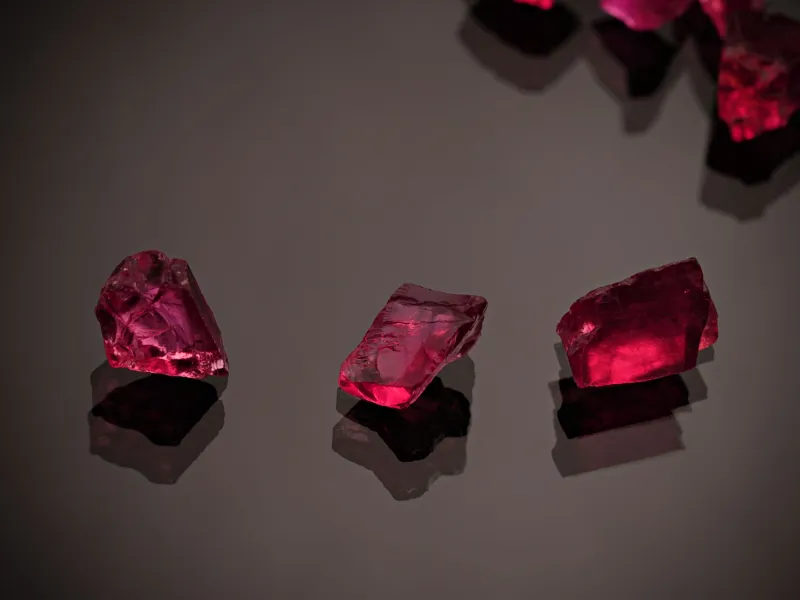
Color: The most important factor. True investment stones display a vivid, saturated red — sometimes described as a "traffic light" red or the aforementioned pigeon-blood. Color should be consistent throughout the stone, not concentrated in patches.
Clarity: Minor inclusions are acceptable and expected in natural rubies, but stones with eye-visible fractures or heavy internal cloudiness lose significant value. Needle-like rutile inclusions ("silk") can actually enhance a stone's value when they create a soft, velvety appearance.
Origin: Burmese rubies from the Mogok Valley carry a premium that reflects both their quality and their history. Mozambique rubies have emerged as a strong second option, with some specimens rivaling Burmese material in color and clarity.
Certification: This is non-negotiable for investment purposes. A certificate from a respected independent laboratory — the Gemological Institute of America (GIA), Gübelin Gem Lab, or the Swiss Gemmological Institute (SSEF) — confirms origin, treatment status, and quality grades. Never buy a ruby as an investment without a current, reputable certificate.
Treatment disclosure: Heat treatment is common and generally accepted in the trade, but it does affect value. Unheated rubies with excellent color command significant premiums — sometimes two to three times the price of comparable heated stones.
Voices from the Field
We spoke with several collectors and gemstone professionals who've watched this market evolve firsthand.
"Five years ago, I had clients who thought I was being eccentric when I suggested rubies as part of a diversified wealth strategy," says one independent gemological consultant based in New York who advises high-net-worth clients. "Now those same clients are calling me asking how to add more. The returns on unheated Burmese stones especially have been genuinely impressive."
A collector in California who began purchasing fine rubies in the mid-2010s shared a similar perspective. "I started because I just loved them — I wanted something beautiful that I could actually hold and enjoy. The financial upside was almost secondary. But looking back now, the rubies I bought have outperformed almost everything else in my portfolio over that same period."
Gemologists also caution that the market rewards patience and education. "You have to know what you're buying," notes one appraiser who works with estate jewelry in the Chicago area. "The spread between a mediocre ruby and an exceptional one is enormous. This isn't a market where you can just pick something off a shelf and expect it to appreciate."
How to Get Started Without Getting Burned
If you're considering rubies as part of your investment strategy, here are a few practical steps to protect yourself:
-
Educate before you spend. Read up on ruby grading, origin characteristics, and treatment types. The more you understand, the harder it is for someone to take advantage of you.
-
Work with reputable sources. This means established dealers, auction houses with transparent provenance records, or curated platforms like Ruby Group Shop that vet the stones we offer and provide full documentation.
-
Always get certification. We said it above, but it bears repeating. A GIA or Gübelin certificate is your foundation of trust in any significant purchase.
-
Think long term. Rubies aren't a quick flip. The best returns tend to come to collectors who hold quality stones for five years or more and sell at the right moment — typically through major auction venues or direct to motivated collectors.
-
Budget for insurance and storage. Investment-grade gemstones need proper coverage and secure storage. Factor these costs into your overall return calculations.
The Ruby Group Shop Perspective
We've built Ruby Group Shop around the belief that exceptional rubies should be accessible to serious collectors at every stage of their journey — not just to billionaires bidding at Geneva auctions. That means curating stones with verified documentation, working with trusted gemological partners, and being straightforward about what a stone is and what it isn't.
The investment case for fine rubies is compelling, but it's also nuanced. Not every ruby appreciates dramatically. Condition, certification, origin, and timing all play a role. What we can say with confidence is that the market for truly exceptional rubies has never been more active — and for buyers who approach it with knowledge and patience, the rewards can be significant.
Whether you're a seasoned collector or just beginning to explore gemstones as an alternative asset, we're here to help you navigate the market with confidence. Browse our curated selection, ask questions, and take your time. In the world of fine rubies, the best decisions are always the well-informed ones.